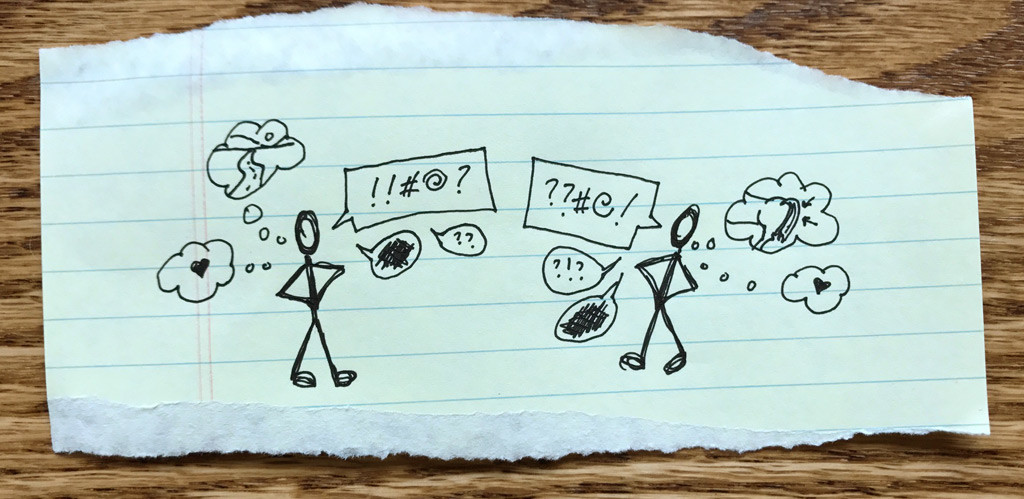
State your position. Don’t listen. Raise your voice to make sure you are heard. Roll your eyes. Say something to show how ridiculous anything other than your position is, like “UGH!” Then leave the room. If there’s a door, be sure to slam it.
Thank you, beautiful people in the entertainment industry, for teaching us how to handle disagreement and confrontation.
Trouble in Paradise
Take our first big argument after we were married. It seemed so crazy to even be fighting with this person I loved so much, so it was sort of surreal anyway, but also, we didn’t really know what the rules were. We hadn’t gotten there yet. So, when I thought he said something particularly absurd, I walked out of the house and slammed the door behind me. I remember specifically thinking as I was leaving that I should slam the door, because that’s what you do… right? I got about half a block away before I realized that I was still just as upset, and he was probably glad I had left. I turned around, came back in that front door, and we started to learn how to resolve an issue together.
Which reminds me… when I say “resolve an issue”, what I mean is that you both work through an issue to the point where you agree that you’ve found a solution you can both live with. One person saying, “we’re doing it this way,” and the other saying, “okay,” because they just don’t like conflict and don’t want to fight (even though they don’t agree), is not resolution. It’s capitulation, and it’s a marriage killer for sure.
Rules for a Fair Fight
My parents have an amazing marriage, but not without occasional conflict, and they didn’t hide their disagreements from us kids. Probably most of my ideas about how to “fight fair” come from watching them. Here are some of their (and our) unspoken rules — the first three I’m including should be obvious, but… maybe they aren’t to everyone:
- No physical abuse
- No yelling
- No name-calling
This next batch of rules are for the intermediate class:
- No swearing: Though it’s tempting when we’re mad, the swearing just ends up being hurtful, and makes you feel like a jerk after you’ve said it. Better to steer clear and keep it clean.
- No eye-rolling: Eye-rolling is a sure sign of disdain, one of the first studied indicators of a marriage that might be in trouble. It’s the quickest way to convey to the one you love that you actually think they are a clueless, thoughtless buffoon.
- No bringing up past events that have already been resolved. This just complicates the current issue. Usually, it’s a smoke screen to make the issue seem bigger than it really is.
And here are a few tips to help resolve an issue more quickly:
- Non-conflict timing. If there’s something that’s bothering you, don’t wait till it happens again to bring it up. Instead, look for a non-conflict time — when both of you are calm and all is well — to talk it over. If you bring something up when you’re angry about it, your partner is likely to feel defensive, making resolution more difficult and emotional.
- Remember, you are not the same person. Though you are married, you are still yourselves, and you still get to have your opinions and preferences. Rick hates nuts in cookies, I like them. No right vs. wrong here… just different. BUT, deciding what sort of business you might build together requires agreement. Have understanding for differences, but find common ground when it counts.
- Take a time-out. If you can muster the self control, agree to take a quick time-out to cool off and think through what your part in the conflict is. Are you being defensive when you could be learning something about your partner’s heart? Are you just being selfish?
- Apologize with sincerity as soon as humanly possible! When you wait to apologize about something you’ve said or done, it’s a little like throwing up on someone, than waiting to clean it up when it’s more convenient for you. Having to sit there in that crap makes it pretty hard to move on with no hard feelings.
- Let it go. When someone apologizes — especially when it’s a heart-felt apology — forgive them. Move on. Don’t bring it up again.
- Be brave. For a lot of people, resolving something that bothers them is really hard to do. They might put it off for years, piling up layers of hurt and anger, while their love is unaware there’s even a problem. It’s not fair to hold something against someone when you haven’t told them it’s a problem.
Because every couple is different, with a different combinations of personality traits and triggers, you’ll have to add to this list as necessary to fit your relationship. But, if you both agree to this basic set of rules, you’ll have the tools you’ll need to navigate those tough conversations.